










|
||||||
 Soon after his POW camp was liberated by the Russians, Ed Gitlin embarked on a journey through Russian occupied Poland and Germany motivated by a desire to witness the history unfolding around him. |
 German native Uwe Grapengeter served as an interpreter for the U.S. Army's military government in postwar Germany which helped him locate and assist his own relatives impacted by the devastation of war. German native Uwe Grapengeter served as an interpreter for the U.S. Army's military government in postwar Germany which helped him locate and assist his own relatives impacted by the devastation of war. |
 Ben Miller's ability as a combat medic saved the lives of soldiers in the field, but he was frustrated by the lack on information field soldiers received about their friends once they left the front lines. Ben Miller's ability as a combat medic saved the lives of soldiers in the field, but he was frustrated by the lack on information field soldiers received about their friends once they left the front lines. |
 Stepping on a German land mine in Eastern France was the start of Daniel Pettee's lengthy journey of recuperation from serious injuries. Stepping on a German land mine in Eastern France was the start of Daniel Pettee's lengthy journey of recuperation from serious injuries. |
|||
 After escorting a crippled plane to safety in Russian occupied Poland, P-47 pilot Pete Peterson was stranded with other American fliers and found the Russians less than willing to help fix their planes and get them back to their units in Western Europe. That led to a dramatic escape in a hastily repaired B-17. After escorting a crippled plane to safety in Russian occupied Poland, P-47 pilot Pete Peterson was stranded with other American fliers and found the Russians less than willing to help fix their planes and get them back to their units in Western Europe. That led to a dramatic escape in a hastily repaired B-17. |
 Lee Guenther was stationed at General Eisenhower's Supreme Allied Headquarters during the preparations for D-Day, overseeing women who were sending and receiving coded messages to the invasion units. Soon after the landings, she and and other women from headquarters spent time on the beach in Normandy until communications could be firmly established. |
 As a combat infantry scout, Wright Morgan would observe German movements and direct fire on potential targets. One day, observing from a captured German pillbox, he witnessed a medical convoy that he suspected wasn't all that it seemed. |
 Foward artillery observer Ron Fenolia could come within yards of the Germans while on scouting and observation missions. He tells how his observer teams operated, where they looked to observe the enemy and what they did when a target was spotted. Foward artillery observer Ron Fenolia could come within yards of the Germans while on scouting and observation missions. He tells how his observer teams operated, where they looked to observe the enemy and what they did when a target was spotted. |
 Hubert Peters was in one of the worst places to be when the opening artillery barrage at the Battle Of The Bulge began...by himself in an open field. Hear him tell how he managed to get back to his unit just in time to evacuate. |
||
 German fighter pilots proved to be a tough enemy for American bomber crews, and didn't just pose a threat over enemy-held territory. Grant Oasheim says the bombers were vulnerable even on approach to their English bases. |
 In World War II, letters provided the only communication with home for soldiers deployed overseas. Phil Bissell describes how letters kept him in touch with his wife and informed him of the birth of his first child. |
 Communications specialist Louis Goos found himself isolated from his unit during the invasion of Italy in 1943. He and his crew were left behind during a German counterattack and had to fend for themselves until the Allies could regroup and retake the area. |
 Axis naval forces were active in the Caribbean
before and after the Pearl Harbor attack. Newell Moy flew anti-submarine patrols in antiquated B-18 bombers, and recalls how brazen the Germans were and where they could go for help in the area. Axis naval forces were active in the Caribbean
before and after the Pearl Harbor attack. Newell Moy flew anti-submarine patrols in antiquated B-18 bombers, and recalls how brazen the Germans were and where they could go for help in the area. |
 Wayne Coleman flew two of America's best fighter planes during World War II, The P-47 and the P-51. He says that the P-51 gets more attention these days, but he actually preferred flying the Thunderbolt. |
||
 As a dietician at an Army hospital behind the lines in France, Ruth Jones didn't expect to come under air attack by the Germans, but on Christmas Eve 1944, the soldiers a her hospital found that attending a party may have saved their lives. |
 Joe DeLio had a bad feeling before the mission where he was shot down over Germany. The extra precautions he took that day saved his life when he was literally blown out of his exploding bomber by anti-aircraft fire. |
 One of the foremost challenges of invading across the English Channel was supplying the troops that landed in Normandy for the breakout into France. Ed Reilly served in the Navy and tells of how engineers built and repaired port facilities to keep the invasion going, |
 Stationed at a hospital in Europe receiving casualties from the front lines, Vinton Guy couldn't help but feel for the soldiers he saw recuperating from permanently disabling wounds, often just weeks into their service. |
 Before travelling over the English Channel to bomb the Third Reich, heavy bombers would form up over England in an intricate process. Lennart Wallden details how pilots would get in the proper formation with hundreds of planes from multiple squadrons in the air all at once. |
||
 Late in the war American bomber crews faced a nearly invincible challenge from German jet fighters. Don Nate describes how the ME-262s would attack bomber formations, and about their one of their few vulnerabilities. |
 The view from the ball turret provided Robert Egnew a wide field of view for all the things that could happen during a B-17 bombing mission. |
 Most aircraft mechanics stayed on the ground, but Leonard McKinney was fortunate enough to find a pilot who would let him join the crew and fly on the planes that he prepared and repaired. |
 When a bomber took off for a mission to Germany, the crews that prepared the plane were often left in the dark for hours waiting for their return, and dealing with the possibilty that the fliers they worked with on a daily basis might not come back as Guy Purdy describes. When a bomber took off for a mission to Germany, the crews that prepared the plane were often left in the dark for hours waiting for their return, and dealing with the possibilty that the fliers they worked with on a daily basis might not come back as Guy Purdy describes. |
 On The B-17, perhaps no crewman was more isolated than the ball turret gunner who flew on the bottom of the plane in cramped conditions. Billy Thornton describes what it took to fly in the ball. |
||
 Rigney Sackley was part of a special unit that addressed technical problems experienced by Eighth Air Force fliers on mssions from England to the Continent. Here, he describes one particular issue that victimized a number of heavy bomber crews. |
 The P-47 Thunderbolt turned out to be one of the most effective weapons against the dreaded German Tiger tank. Warren Foote describes one tactic that P-47 pilots discovered to hit the Tigers where they were most vulnerable. |
 The story of Martin Small's rescue from Mauthausen has a twist that he didn't discover for nearly 60 years. Watch this entire clip for one of the most amazing stories you'll ever hear from World War II. |
 Wendy Oakes treated casualties of the Battle Of The Bulge at an evacuation hospital. Doctors and nurses there had to learn quickly how to adapt to the injuries they were facing, and were affected by the impact those injuries would have on the men who suffered them. |
 The approach to the target was one of the most dangerous times for the men flying bombing missions. Joe Clarke describes how planes were vulnerable in the moments immediately before and after reaching the target. |
||
 Upon liberation as a POW from Stalag Luft 1 in May 1945, Loy Dickinson got a taste of future Cold War rivalry when he and other American prisoners were nearly interned by the Russians, and would only be released when certain conditions were met. |
 One of the deadliest and least-known accidents of World War II, Operation Tiger, occurred less than a month before D-Day as Carlton Goodwin recalls. |
 Few things went smoothly on Dewey Augenstein's English Channel crossing to Utah Beach on D-Day. His artillery crew had difficulty getting to the beach and though they didn't land under fire, he soon made a rookie mistake. |
 Not long after arriving at the front for the first time, Al Nelson experienced the first attacks in The Battle Of The Bulge, where he feels history hasn't given enough credit to his undermanned 99th Division. |
 Ray Spiro survived over two years of tank combat with the Germans. Here's his account of the mortality American tankers faced, and the strategies they used to overcome superior German armor. |
||
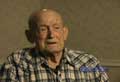 After glider pilots delivered their troops and cargo behind the German lines in Normandy on D-Day, they became ground troops whose goal was to get back to the American side of the lines. Along the way they faced numerous hazards, and Jesse Black describes how one man in his group discovered a newfound appreciation for foxholes. |
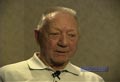 Tom Gunning fought from the opening invasion of North Africa to Anzio. Here's his account of the action during the opening stages of the invasion of Sicily that earned him a Silver Star. |
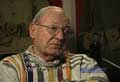 During and immediately after the D-Day invasion, the Navy was on constant lookout for German submarines. Bill Kenyon describes the tactics used to prevent the U-Boats from disrupting the flow of supplies and reinforcements to the beachhead. |
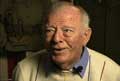 Ken Wilson learned that getting on the wrong side of a superior officer can get you taken out of cushy stateside duty and sent to Europe to fly gliders into combat. He talks about why he didn't exactly relish his new assignment. |
 The American push into Germany was slowed by the numerous rivers that needed to be crossed. Bill Hessin tells how Army Combat Engineers constructed ponton bridges that allowed entire divisions to cross and continue the advance quickly. |
||
 Few bombing missions were costlier to the Eighth Air Force than the infamous Schweinfurt raid of October, 1943. Jim Tracy was one of the fliers shot down in that raid, and he says the results weren't completely unexpected to the men who flew that day. Jim spent six months with the French Underground before escaping through Spain and returning to England. |
 The Eighth Air Force's early raids on Germany proved so costly it necessitated a dramatic overhaul in tactics. Barney Nolan addresses how General Curtis LeMay devised new formations that protected more bombers and made the raids more effective. |
 The most forgotten of all the service branches is the Merchant Marines. Still fighting for recognition and respect, their contributions during the war were seldom publicized, largely due to the fact that they had higher casualty rates that the other branches of service as Clark Valles explains. |
 Events moved quickly at the end of the war in Europe for Bill Moore. The Germans managed to put up sporadic resistance almost to the very end, albeit with a ragtag collection of troops. |
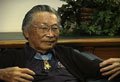 Joe Sakato of the 442nd Regimental Combat Team was recruited into the Army from the internment camps Japanese-Americans were imprisoned in after the war started. He tells of what finally receiving the Congressional Medal Of Honor meant to him 55 years after his heroic actions in France. |
||
 Felix Sparks, one of America's most decorated soldiers, commanded the first American unit to enter the Dachau Concentration Camp. Another unit soon entered and a controversial incident developed with the Germans taken prisoner there. |
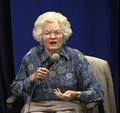 As a court reporter at the Nuremberg Trials, Vivien Spitz saw some of the worst of humanity, but also describes how some were able to resist the Nazis...even in the concentration camps. |
 Phil Antonelli recounts how soldiers fighting their way across France in 1944 dealt with the fear inherent in combat and how the bonds between each other helped them deal with the fear. |
 B-24 navigator Vern Bingham flew in the lead plane in some of the largest bombing raids in Southern Europe. He discusses the experience of high altitude daylight bombing and the importance of bombardiers and their equipment. |
 After his bomber was shot down over Germany, Bob Ball learned what it took to survive as a Prisoner Of War. Here, he describes what men did to cope with their captivity. |
||
 B-17 Armor Gunner Mike Quering talks about the mental intensity of air combat over Europe and the stress it brought upon the young crewmen who carried out the missions. |
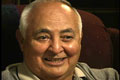 One of the most famous aviation units of World War II played a role in the rescue of Gil Maestas. He tells the aftermath of a raid to southern Germany that gave him a lifelong appreciation for the Tuskegee Airmen. |
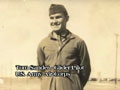 Glider pilot Tom Sander thought the life of a glider pilot would be exciting and glamorous, but had a different impression after flying into Normandy on D-Day +1. |
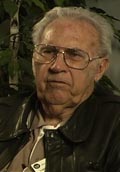 German fighter pilots were particularly good a attacking American bomber formations from angles that offered the best possibility of doing damage to the bombers with minimal opportunity for response. Lucky McGinty was a gunner on B-17s and describes how the Germans preferred to attack. |
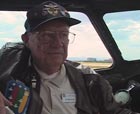 Though Mitch Mischler's plane made it through its missions relatively unscathed and he completed 25 missions quicker than almost anyone, others in his bomb group weren't as fortunate. He tells of the most dangerous missions his group faced, including a long-range trip to Berlin without fighter escorts. |
||
 Few pilots have had the varied flying experiences of Orville Horn. An American who enlisted with the RAF before America's entry into the war, he few Hurricanes and Spitfires before transferring to the Army Air Corps, which immediately assigned him to fly B-17 bombers. Here he describes whether he'd rather fly a fighter than a bomber. |
 In the winter of 1945, the Germans moved prisoners of war out of their camps and marched them through the German countryside in the cold and snow. Among them was Duane Thayer, who'd been shot down and captured several months before. Though in German custody on the march, he and his fellow POWs did have protection from their fellow American fliers along the route. |
 The inevitable casualties of the air war also brought about awkward situations as replacement crews were brought in to replace the dead and missing, often within hours of their loss. George Meshko discusses how veteran fliers reacted to these new colleagues. |
 Hal Weekley flew the B-17 during the war, and flew it while touring the country with the Aluminum Overcast into the 21st Century. During many visits, he noticed a number of spectators who always seemed to watch the plane from afar. He soon learned there was a very special reason for their interest. |
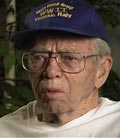 For all the men who flew on the heavy bombers, there were many more on the ground who did the important work of keeping the planes in the air, often salvaging equipment from damaged planes to keep others airworthy. Henry Dahlberg was a crew chief in charge of several maintenance crews, and was so valuable he was forbidden to fly on the planes he maintained. |
||
| World War II Pacific | ||||||
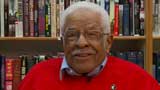 Though Japan had surrendered, occupation forces expected resistance when landing on Honshu. Waverly Person worried that racial segregation would make the landing more dangerous for black troops and raised his objections. Though Japan had surrendered, occupation forces expected resistance when landing on Honshu. Waverly Person worried that racial segregation would make the landing more dangerous for black troops and raised his objections. |
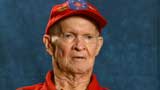 The first wave of the invasion of Iwo Jima was the first taste of combat for Jack Thurman. He began to realize the brutality of the fighting ahead of him even before he reached Red Beach, as the Japanese attacked the landing force from the air. |
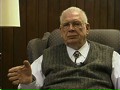 Lou Eckland was a bombardier on B-24's in the China-Burma-India theater, where, late in World War II, he and other bombers in his unit experimented with one of the first attempts at a smart bomb. The "Azon Bomb" was a radio guided bomb used against bridges in Japanese occupied Southeast Asia. |
||||
 Joe Lemmo served aboard the USS Steamer Bay, one of several "Jeep Carriers" smaller versions of the more famous attack carriers that dominated Naval battles in the Pacific. He tells what it was like to come under air attack while on one of "Kaiser's Coffins". |
 As the ship's photographer aboard the USS Missouri, Stan Kerkhoff had a prime vantage point for the surrender of the Japanese to General Douglas MacArthur. Not only did he have to accompany Japanese and Russian photographers during the ceremonies, but he also found a way to take some rarely-seen movie footage of the historic event. |
 Jack Tanner had a close call while helping build a runway with his Seabee unit on Tinian. Even when islands were largely thought to be secure, the engineers still came under attack from the air. |
 Though his ship's primary duty was to scout for submarines, Bob Seeber's Destroyer Escort's biggest threat came from Kamikaze attacks on the "Ping Line" between the home islands of Japan and Okinawa. |
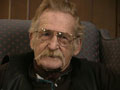 In the early days of World War II, the Marines often didn't get the best pilots for their small air wing. John Brown was a tail gunner for a particularly poor pilot who ditched his plane in the ocean five times, and was lucky to survive the experience. |
||
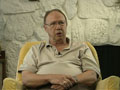 When World War Ii ended, American Naval vessels docked in Shanghai, China. Though the Japanese occupiers were gone, Shanghai was still under threat by Mao's Communist forces and Americans wouldn't be welcome there for long says Bill Greenwald. |
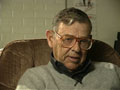 John Atkinson entered the service and went overseas just as World War II was winding down and feels that just by being a year or two younger than many of his high school classmates might have saved his life. |
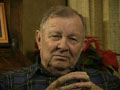 Even after Japanese-held islands were taken by American forces, there were still Japanese soldiers holding out in the jungle, fending for themselves after the battles ended. Jim Van Buskirk tels of how close the holdout Japanese on Tinian would get to American bases. |
 Marines fighting on Okinawa not only fought the enemy on the ground, but also underground, as the Japanese hid in caves and tunnels. Howard Beasley describes how difficult it was to root out an enemy that lived and fought in tunnels. |
 Hal Leith led a small team that parachuted into Japanese-occupied Manchuria right after the Emperor's announcement of the surrender. Their goal was to make contact with Allied POWs held at a camp near Mukden, but first, they had to convince the Japanese that the war was over, and Leith had to keep his own team from provoking a firefight. |
||
 Flying cargo missions in the C-47 in the China-Burma-India theater often required taking off and landing from crude jungle airstrips far shorter than the planes were supposed to use. Monroe Withers tells what pilots had to do to deal with such short airfields. |
 Flying long-range missions to China could get boring for bomber crews without listening to Tokyo Rose. Paul McDowell notes that not only was she accurate in predicting their targets but she also broke a major news story. |
 A veteran of multiple amphibious landings as a Marine Raider, Ben Hartman found out that Japanese resistance during the invasion of Guam would prove tougher than any of his previous landings. |
 Joining his P-38 squadron in the late stages of the Pacific War, Saul Nova had a memorable experience upon the war's end when he flew into a Japanese airfield soon after the surrender. |
 Flying over the high mountains in the China-Burma-India Theater presented challenges for pilots. C-46 pilot Stan Miller describes how flying at high altitudes would affect the crews transporting vital cargo over some of the world's toughest terrain. |
||
 Tony Romeo was part of a small and unusual squadron of bomber pilots in the Pacific Theater, flying alone on missions looking for naval targets of opportunity. He tells about how his unit's tactics differed from the way most heavy bombers operated. |
 Only at teenager at the start of the war, Yvonne Charles was among the civilians caught up when the Japanese overran the Phillipines. She tells of what internment was like for the women and children she was with, and of how her father was lost in a tragic accident. |
 Even the first few hours of combat can harden men to extraordinary situations. During the invasion of the Marshalls, John Greaves describes how on his first landing, he quickly became numb to the carnage around him. |
 Stanley Knoop was aboard the USS Vestal, a repair ship, that was moored right next to the USS Arizona when the Japanese attacked Pearl Harbor. He describes what happened when the attack initially occurred, the damage his ship sustained as Japanese planes targeted the larger battleship beside it, and seeing the doomed Arizona crewmen before the ship exploded. |
 Don Whipple's first taste of combat came on day one of the invasion of Iwo Jima. Fresh out of training with other green troops, he tells when it began to sink in that it wouldn't be like the repetitive training exercises they had become bored with. |
||
 Working in a field hospital in the South Pacific during World War II often meant making do with less than ideal facilities. Penny Schumann, a nurse in several field hospitals, recounts how the Army went about setting up operating rooms and patient wards in temporary quarters within a few miles of the front lines. |
 Infantry observer William Vickers went ashore in the invasion of Peleiliu, one of the toughest days the Marines had before Iwo Jima. He tells about how the initial landings unfolded. |
 Paul Murphy is one of only 317 survivors of the sinking of the USS Indianapolis at the end of World War II. Though many more men survived the initial attack by a Japanese submarine, there were more perils in the water before they could be rescued. |
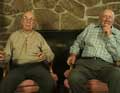 A rare treat...two of the Doolittle Raiders at one location. Jimmy Doolittle's Co-pilot Dick Cole and Bill Bower, pilot of the 12th plane, discuss their famous mission to bomb Tokyo in April 1942. |
 John Doolittle, son of Jimmy Doolittle and his daughter Jonna Doolittle Hoppes on how the Hollywood movie "Pearl Harbor" inspired her to write a biography focusing not just on Doolittle's career but on the man they knew as a father and grandfather. |
||
 B-29 pilot Bill Reynolds describes the varying accounts he and his crew have come up with while discussing their war experiences at reunions decades after they happened. |
 Before pilots could launch missions, an accurate weather report was essential to their safety and mission success. Air Corps meteorologist Dick Newell tells how the weather affected pilots around his bases in New Guinea and Darwin, Australia. |
 The importance of training was driven home for Julius Jordahl when the USS Tennessee was attacked at Pearl Harbor. He survived the attack, where the crew members at his station on the nearby West Virginia paid a price for a lack for preparedness. |
 Clay Decker was one of only nine men to survive the sinking of the submarine USS Tang. He was taken prisoner by the Japanese, though wasn't considered a Prisoner of War by them. Hear him tell about what it meant to be a "Special Prisoner Of Japan". |
 Few men are as resilient as Glenn Berry. He spent nearly all of World War II in brutal Japanese captivity, Berry survived being bombed off of two "Hell Ships" transporting him to Japan, but not before enduring the Bataan Death March. |
||
| World War II Home Front | ||||||
 As a girl, Dutch native JosMarie Vanderspek lived under German occoupation. She tells how the Germans directly impacted her family's life, and of their efforts to resist by assisting the Dutch Underground. |
 Ed Kirsch spent the war as an armaments trainer, teaching fighter pilots and bomber crews on the use and maintenance of machine guns. He tells that accidents involving inexperienced users could be deadly. |
 Russ Warmack spent most of World War II in high school, and was eager to enter the service right after graduation, but escaped the dangers that many of his older classmates faced...and seldom talked about. |
||||
 World War II provided the first opportunity for many people to travel to different parts of the country for the first time. Brooklyn-born Sophie Bellino followed her husband to an air base in Texas, where she also got a job in a war production factory. |
 Bryan Jaggers was just 7 years old and living in a suburb of London when World War II began. Within a year, the German Blitz would hit very close to his family. |
 Radio was the way most people heard about the Japanese attack on Pearl Harbor. Jim Bennett describes how small-town America found out the country was suddenly at war. |
 Art Peterson was announcing live on the radio when the bulletins came down the wire for both the start and end of World War II. Hear him describe the differences between the reports of Pearl Harbor and V-J Day. |
 For the loved ones of Americans held as POWs by the Germans, information about their well being was slow in coming, but Peg Ball says there were ways to keep in contact with her then-boyfriend Bob Ball. |
||
 As a military policeman, Frank Busnardo oversaw German Prisoners Of War on work details, where they proved not only resourceful, but actually made a little bit of money. |
 At the end of World War II, a corner of northeastern Italy was awarded to Yugoslavia, uprooting thousands of Italian civilians who'd lived in the area for generations. Laura Busnardo recounts how the evictions dispersed families and friends all over the world. |
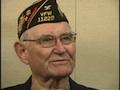 Rio Lucas was already stationed at Denver's Lowry Air Force Base early in World War II when he became one of the first servicemen stationed at a brand new facility then being constructed, Buckley Field. |
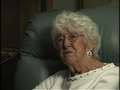 Women in the armed forces have far more opportunities to serve than when Sally Guy joined the Army in World War II. Now, she takes pride in how the women of her era made it possible for the servicewomen of today to succeed. |
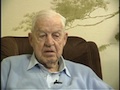 A former college basketball player, Murray Brown was tasked with the duty of getting new recruits in top physical condition for combat. Though the training was hard, he found that the men were willing to work. |
||
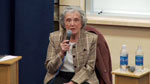 Bernie Langfield's husband was killed in the battle for Aachen, Germany in 1944. She tells of how the widows of fallen soldiers were notified, and of receiving a gift that arrived after her husband's death. |
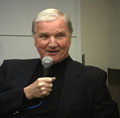 As a young boy growing up in the countryside of England, Robert Goldie frequently saw German bombers fly directly over his house on their way to raid English cities. One night, he saw the devastation brought to two cities from miles away. |
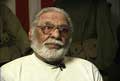 Before fighting in Korea, a young Jim Madrid witnessed history outside his hometown of Alamogordo, New Mexico when early one morning, he unexpectedly viewed one of history's pivotal events. |
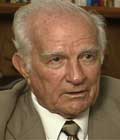 It took a different breed of individual to take off and land fighters from an aircraft carrier, particularly the smaller ones used in World War II. Daryl Wilson describes what it was like for those pilots. |
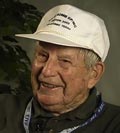 Before facing the dangers of combat, young bomber crews faced the unique dangers of training. Daniel Oredson tells about one training flight that ended comically, but could have been deadly. |
||
 Romana Antonelli was only a child during the war, but war intruded on her family when her American-born mother decided to rescue a downed British flier in Nazi occupied northern Italy. |
 Ruth Prudhomme served as a nurse stateside and in field hospitals of the South Pacific. Before going overseas, she treated casualties from the Aleutian Campaign and found the Army was ill-equipped for fighting there. |
 Front line troops get most of the credit, but Clarence Edmonds knew the importance of the troops behind the lines who seldom got the credit they deserve. |
 Pauline Edmonds discusses moving to Oak Ridge, Tennessee where her entire family was employed in the Manhattan Project. |
 Louise Lyon treated German POWs at a camp in Louisiana. She recounts one incident where the differences between America and Germany at the time became apparrent to her. |
||
| Korean War - Cold War | ||||||
|
 As part of a Marine unit that constructed helipads near the front lines, Bob Murphy's helicopter unit was often called on to help transport men to the front and bring back the wounded and dead. He recalls one particular situation that affected him for the rest of his life. |
 Ben Smith witnessed the courage of Marine infantrymen when they were called upon to undertake near suicidal missions just to take a few hundred yards of ground or a single hill during the stalemate fighting in 1952. He also witnessed the toll it took on the officers who led them. |
 After being wounded in Korea, Chic Fries found it hard to readjust to normal life back in the states while recuperating. His family's lack of understanding about what he'd been through didn't help much either. After being wounded in Korea, Chic Fries found it hard to readjust to normal life back in the states while recuperating. His family's lack of understanding about what he'd been through didn't help much either. |
 Few campaigns demonstrate the resilience of the United States Marine Corps than the retreat from the Chosin Reservoir in the winter of 1950. One of the "Chosin Few" was Don Johnson, who describes the relentless Chinese attacks and bitter cold during the two week retreat. |
||
 Carl Hardesty served as an electrician aboard diesel-powered submarines before becoming part of the crew that constructed the first nuclear sub, the USS Nautilus. He notes that the nuclear boats and a number of advantages that his previous subs didn't have. |
 For decades after his service in the Korean War, Al Jeffries stuggled to remember one of his combat experiences until he uncovered letters he'd sent home which confirmed a military blunder. |
 Keeping a B-29 in flying condition meant a lot of hard work and long hours for the mechanics on the ground. Robert Blum describes what kind of problems they'd have keeping the aging bombers in the air. |
 Perhaps nothing made fighting harder in Korea than the weather, particularly the bitter cold in the mountains. Tom Foley details how the solders there dealt with the conditions. |
 Flying jets on and off of aircraft carriers in the is one of the most thrilling and hazardous experiences in the military. Bill Roberts describes what goes through the mind of a pilot making his first carrier landing. |
||
 Lou Barrientos fought in some of the Korean War's bloodiest battles, but for him, Bloody Ridge was the worst. The carnage and intensity of that battle stands out in his mind even after witnessing several other vicious conflicts. |
 The biggest howitzers of the field artillery in Korea required a crew of several men to operate. Robert Fleming details the process needed to fire the big guns. |
 When the lines stalemated in Korea, the fighting continued with little ground being made. Ken Harris describes the artillery duels the Americans and Communist forces engaged in. |
 With limited eyesight, Arthur Bjorhus' service consisted mostly of serving chow to hungry soldiers. At a field kitchen in Korea, he served an officer who nearly gave him an assignment he wasn't remotely prepared for. |
 During the Korean War, Air Force communications and intelligence personnel used the most sophistocated technology of the time to intercept and crack enemy codes. Joe Weibel details what high tech consisted of in the early 1950s. |
||
| Vietnam War | ||||||
|
|
 Fighting in the jungle presented many hazards, not all of them from the enemy. Michael Carmichael describes how the jungle could help troops in the field detect and avoid a threat from a natural enemy. Fighting in the jungle presented many hazards, not all of them from the enemy. Michael Carmichael describes how the jungle could help troops in the field detect and avoid a threat from a natural enemy. |
||||
 Tom Courant's role as an Army staff officer at the Pentagon was made more difficult as he dealt with the political and bureaucratic expectations of civilian and military leaders directing the Vietnam War. Tom Courant's role as an Army staff officer at the Pentagon was made more difficult as he dealt with the political and bureaucratic expectations of civilian and military leaders directing the Vietnam War. |
 The 1972 North Vietnamese invasion nearly trapped American and ARVN forces stationed near the DMZ. Tom MacKenzie and his South Vietnamese counterpart led armored forces in a desperate attempt to pull back to safer territory before being overrun. The 1972 North Vietnamese invasion nearly trapped American and ARVN forces stationed near the DMZ. Tom MacKenzie and his South Vietnamese counterpart led armored forces in a desperate attempt to pull back to safer territory before being overrun. |
 As a part of the Marines Combined Action Program, Don Schaffer sought to build trust with South Vietnamese civilians. His experiences with them led to his having a different view of the Vietnamese than most Vietnam veterans held. As a part of the Marines Combined Action Program, Don Schaffer sought to build trust with South Vietnamese civilians. His experiences with them led to his having a different view of the Vietnamese than most Vietnam veterans held. |
 A veteran of flying the over "The Hump" in World War II, Don Maison faced danger of a different kind flying supplies and troops into Vietnam, where the enemy was positioned just outside the airbases and often right off the runways where he landed. |
 Marine pilot Bob Wardlaw's base near Chu Lai came under attack during the Tet Offensive. Wardlaw describes how the attack failed militarily but accomplished its ultimate goal. |
||
 The turmoil over the Vietnam War meant many veterans returned home without appreciation, a problem Reed Sundine makes sure doesn't happen to those serving in Iraq and Afghanistan. |
 Green Beret Mark Nichols scouted narrow roads through rugged mountain passes on armored guntrucks leading up the invasion of Cambodia. That frequently led to ambushes by North Vietnamese troops and fierce firefights |
 Not all military tactics are strokes of genius. One tactic during the Vietnam War got a number of soldiers killed unnecessarily according to Tom Ryan. |
 Political considerations hampered the B-52 raids that Lew Moir led over North Vietnam. He outlines some of the restrictions placed on Air Force pilots that endangered their lives. |
 American troops on the ground in Vietnam had one distinct advantage over their enemy, air superiority. Tom Campbell was part of a vital air wing that flew outdated planes, but protected U.S. ground forces by delivering massive amounts of ordnance on the North Vietnamese. |
||
 Flying an F-16 in the Gulf War didn't isolate Pat Hanlon from the reality of combat on the ground. The sophisticated communications between his airplane and infantry units made him aware of how important his missions were for their survival. |
 After the initial invasion of northern Iraq in 2003, Americans needed supplies, and to build relationships with the local population. J.P. Malboeuf was involved in the efforts to contract with Iraqi vendors and serve both of those needs. |
 While on security patrols outside American air bases, Chris Edgerton was impacted by how the children of Northern Iraq interacted with American troops, and how Americans helped alleviate the conditions near a devastated Republican Guard base. |
 Before the start of Operation Iraqi Freedom, engineers had to construct brand new facilities quickly to support the mission. David Wilder tells how important it was to have these new bases ready for operations. |
|
||
A long-term goal of the Center is to offer programs for sale on DVD and VHS culled from this vast inventory of video footage. Check this site frequently to see additional excerpts as the Center continues to conduct interviews and find out when you can purchase programming produced by the Center.
|
||||||